Time & Culture
Why Military Time Is Here to Stay (And How to Actually Use It)
Published July 6, 2026 · 6 min read · Compilation — assembled from multiple sources by Jeanine, Spiderwebagent.com
Every few years someone publishes a "death of military time" hot take. And every few years, the 24-hour clock keeps ticking — in hospitals, in cockpits, in every server log on the planet. The truth is the opposite: military time isn't fading, it's quietly becoming the default of modern infrastructure. Here's why it's not going anywhere, and how to actually use it without breaking a sweat.
1. The Industries That Can't Function Without It
AM/PM works fine when you're meeting a friend for coffee. It falls apart the moment a mistake can kill someone. Hospitals chart medication times in 24-hour format because "give 10 units at 7:00" is a malpractice suit waiting to happen. Pilots, air traffic controllers, and the entire global aviation system run on Zulu time (UTC in 24-hour format) so a flight from Tokyo to Los Angeles doesn't cross midnight three times in the paperwork. The military invented it for the same reason: in combat, "we attack at 7" should never need a follow-up question.
2. Computers Already Won This Argument
Every timestamp your phone, laptop, or smart fridge writes uses 24-hour time under the hood. ISO 8601 — the standard format the entire internet uses for dates and times — is 24-hour, period. Your AM/PM display is a thin UI layer painted over a 24-hour reality. As more of life moves into calendars, notifications, and automated systems that talk to each other, the 12-hour clock becomes the translation layer, not the source of truth.
3. Globalization Made AM/PM the Weird One
Most of the world already lives in 24-hour time. Train schedules in Europe, flight boards in Asia, broadcast schedules in South America — all 24-hour. The US, Canada, the UK, Australia, and a handful of others are the AM/PM holdouts, and even there, the back office runs on the 24-hour clock. When a London team schedules a call with a Singapore team and a New York team, "1430 UTC" is the only sentence that means the same thing to all three.
4. How to Actually Use Military Time
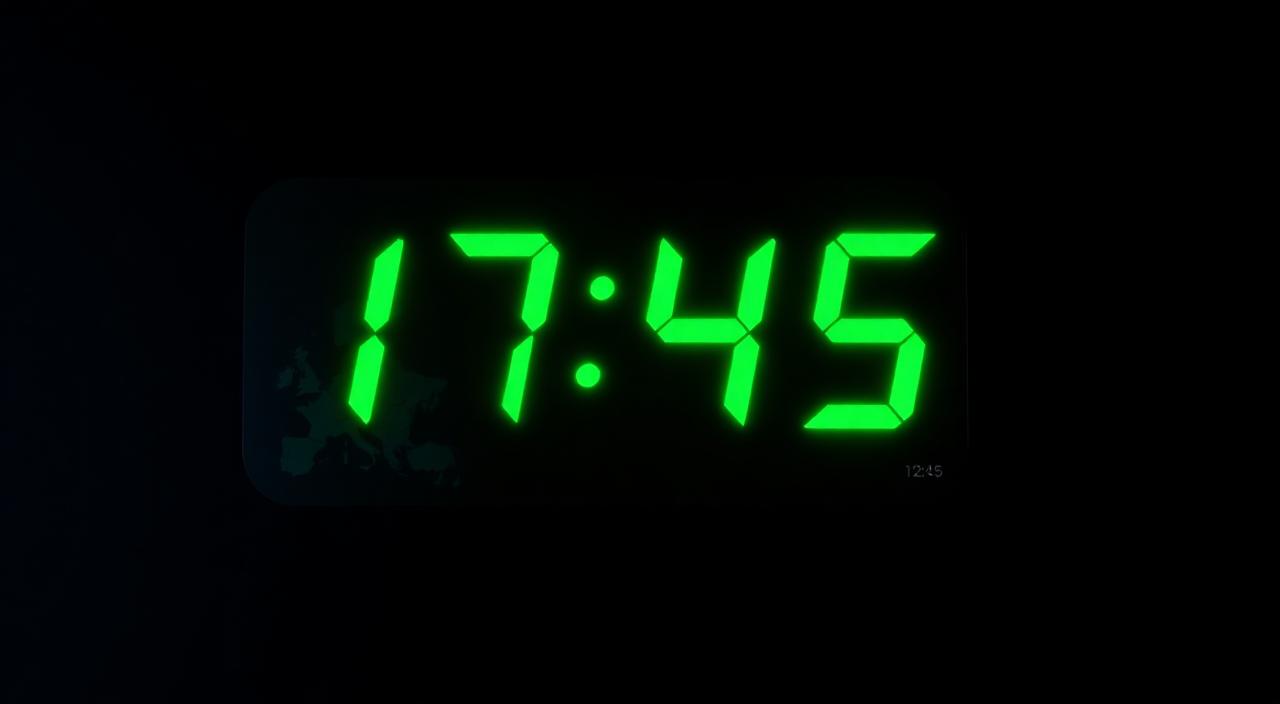
The rules are simpler than people remember. The day starts at 0000 (midnight) and ends at 2359. Mornings are identical to standard time — 8:00 AM is just 0800. After noon, add 12: 1:00 PM becomes 1300, 7:45 PM becomes 1945. Write the four digits with no colon. Say it as "oh eight hundred" or "fourteen thirty hours." That's the whole system.
The fastest way to internalize it: switch your phone's clock to 24-hour for two weeks. After a few days the conversion stops happening in your head and the numbers just are the time. You'll wonder why you ever needed two letters to tell morning from evening. If you want to practice or convert on the fly, the free military time converter and chart on TimerHubs has the full 0000–2359 reference and a live clock.
5. The "Just Get Rid of It" Argument Misses the Point
People sometimes argue military time is intimidating or unnecessary in a world of digital calendars. But the opposite is true: the more time moves through machines, the more we need one unambiguous format that doesn't depend on context, language, or whether someone remembered to type two extra letters. The 24-hour clock isn't a relic — it's the substrate the modern world is built on. The AM/PM display on your microwave is the legacy format, not the other way around.
The Bottom Line
Military time will outlast every "should we abolish it?" think piece because it solves a real problem AM/PM creates: ambiguity in environments where ambiguity costs money, time, or lives. Whether you're a nurse charting meds, a pilot reading a flight plan, a developer writing a cron job, or just someone coordinating across time zones, learning the 24-hour clock is a tiny investment with a lifetime payoff. The 12-hour clock isn't going away either — but the 24-hour clock is the one quietly running everything that matters.
Frequently Asked Questions
Will the US ever switch to military time?+
Officially, probably not soon — but unofficially it's already happening. Health care, aviation, transit, IT, and most international business already run on 24-hour time, even in AM/PM countries.
Is military time hard to learn?+
No. The morning hours are identical to standard time. For PM, just add 12. After two weeks of using a 24-hour display, conversion becomes automatic.
What's the difference between military time and the 24-hour clock?+
They use the same numbers. 'Military time' is typically written without a colon (1430) and spoken with 'hundred' or 'hours,' while the civilian 24-hour clock usually keeps the colon (14:30).
What is Zulu time?+
Zulu time is the aviation and military name for UTC — the world's time-zone reference — expressed in 24-hour format. 1430Z always means 14:30 UTC.